

If you have ever found yourself mindlessly reaching for your vape before you’ve fully woken up, or felt a spike of panic when you can’t find it in your bag, you are not alone. It’s a story I hear each week from my [now] ex-vaping clients.
As a Solution-Focused Therapist, I don’t look at habits through the lens of blame . Instead, we look at how your brain got wired into this loop and how we can use its natural mechanics to rewire it out. But first let’s look at what happens when we vape and why it is so addictive, even compared to traditional cigarettes. Read on or take a look at my Explainer video here.
The Neurochemistry of Vapes
Vapes are engineered to bypass your brain’s natural gatekeepers. When you inhale their vapour, concentrated nicotine salts hit your bloodstream, reaching your brain in < 10 seconds.
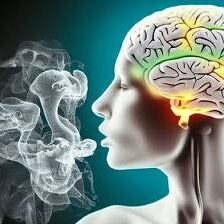
Once there, it mimics a natural chemical called acetylcholine, latching onto receptors and triggering a sudden flood of dopamine—the brain’s ultimate reward chemical.
Because this happens so fast, your brain’s survival architecture makes a calculation: “Whatever we just did made us felt great. Do it again.” Over time, your brain actually grows entirely new nicotine receptors to handle the influx. When those receptors sit empty, they send out alarm signals – we experience what scientists term ‘dopamine holes’ ,showing as irritability, anxiety and intense cravings as the brain scrambles to get back to equilibrium, that positive state.
Quit Vaping : What the latest Science says
Recent data shows just how powerful these dopamine holes can be. But it also highlights why breaking free is so critical for your mental well-being.
The Dopamine Hijack – changing out brain response: Research published by MD Anderson Cancer Center highlights that the Nicotine in Vapes essentially hijacks our executive function and reward processing.
And the fact that the vape delivery has no end, unlike the traditional cigarette, means that most people take in 2-3x the level of nicotine.
It skews the brain so heavily that everyday rewards (like a good meal or social connection) start taking a back seat to the vape.

Read more on this in ‘Dopamine Nation’ by Dr Anna Lembke, an easy read, not just on vapes but all the dopamine creating ‘vices’ from chocolate to sex and drugs.
Why Giving Up Makes Sense
- #1 Vaping creates anxiety: While many people vape to handle stress, a ironically it actually causes and deepens anxiety. A recent study published by the American Medical Association [JAMA} found that Vapes actually doubles the odds of experiencing clinical depression and significantly increases baseline anxiety. The “calm” you feel when you vape isn’t true relaxation—it is just the temporary relief of nicotine withdrawal.
- #2 Health risks- unregulated vapes and chemicals. : In many countries globally , vaping or vape production and sale is banned. India, Thailand, Singapore and Hong Kong have total bans. In most of South America, including Brazil and Argentina, it is illegal to buy, sell or market vapes or e-cigarettes. They are outlawed because governments see the long term health risks of these un regulated additive chemicals ; and want to crack down on the hyper-addictive designs of these products.
#3 Taking back control to Quit I’m not here to make the case or explore the role of governments in controlling our consumption. All I know is what I see day to day in the rewired clinic. You already know it’s expensive, inconvenient and bad for your lungs
If logic alone could fix addiction, nobody would vape.
The problem is that standard willpower operates in the conscious mind, while the automatic hand-to-mouth vaping habit is entirely driven by the subconscious mind.
This is where hypnotherapy comes in. It doesn’t involve losing control or being put into a trance; rather, it is a state of focused relaxation where we can update the subconscious templates that control habits and thoughts.
I’m a fully qualified solution-focused hypnotherapist. We use a number of approaches to ‘rewire’ your brain out of the vaping loop:
Step #1 Rewriting the Emotional Cue
Right now, your subconscious associates the vape with relief, focus, or comfort. In hypnotherapy, we gently break that link. We guide the mind to view the vape not as a “comfort blanket,” but as an external intruder, helping your brain naturally default back to its clean, air-only state.
Step #2 Diminishing the Hand-to-Mouth Ritual . Vaping is highly ritualistic. You do it while driving, between work meetings or call and whilst out with friends. Hypnotherapy works like an editing tool for these mental ‘templates’, disengaging the automatic physical trigger so that the urge simply passes by .
Step #3 Amplifying Your “Preferred Future” Instead of focusing heavily on how hard it is to quit, Solution-Focused Hypnotherapy focuses entirely on who you want to become. On that healthy, less wheezy, less anxious future version of yourself. On experiencing a genuine, stable sense of calm that doesn’t rely on a plastic device.
Quit Vaping With Hypnotherapy- In Just 2 Weeks
When you align your conscious desire to quit with your subconscious, stopping doesn’t have to feel like a endless battle of willpower.
You weren’t born needing a vape to get through the day. Your brain simply learned a highly efficient chemical shortcut. And thanks to neuroplasticity, it can just as easily un-learn it.
Get in touch to find out more. I offer a free 15 minute phone or video call to explain how it works and answer any questions.